Understanding and Managing Upheaval Buckling
Overview
Upheaval buckling (UHB) is one of the classic stability challenges for buried pipelines. It occurs when thermally induced compressive loads in the pipe exceed the vertical restraint provided by the surrounding soil, allowing the pipe to lift out of the trench at locations where imperfections or weak backfill conditions are present.
Although the underlying mechanisms are well understood, UHB response is often governed by the interaction of several factors. These include axial load from temperature and pressure, pipe bending stiffness and submerged weight, backfill quality, and pipeline vertical out-of-straightness (OOS).
Backfill condition and OOS are particularly influential and often highly variable. As a result, even small changes in these parameters can significantly affect predicted performance. This makes reliable assessment dependent on both sound engineering judgement and accurate as-built data.
Our Assessment and Approach
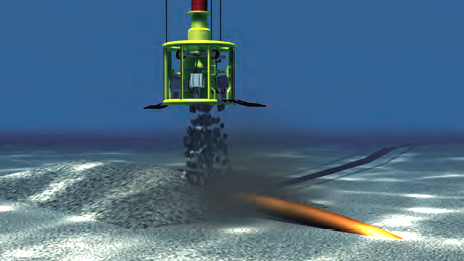
Our approach recognises that upheaval buckling (UHB) is not purely a design-stage issue but is strongly influenced by construction variability and as-built conditions. At the design stage, we perform predictive UHB assessments to estimate required rock dumping tonnages and define appropriate mitigation strategies. These assessments are based on engineering experience and supported by statistical data on pipeline imperfections from previous surveys.
We also use sensitivity studies and probabilistic Monte Carlo approaches to better understand buckling likelihood and to define appropriate load factors to ensure the pipeline remains stable against UHB. This enables the combined influence of key parameters such as axial loading, pipe-soil interaction, backfill quality, and out-of-straightness (OOS) to be captured in a consistent framework.
We see strong potential for machine learning to enhance UHB assessment, particularly for route-wide screening and rapid evaluation of large numbers of imperfection sites. Trained on numerical simulations and as-built survey data, ML models can help identify the parameter combinations that most influence buckling susceptibility and strengthen the link between construction variability and instability risk. In this context, machine learning complements rather than replaces detailed engineering analysis.
Following construction, we perform OOS assessment using as-built survey data to characterise the installed pipeline profile and confirm whether the resulting out-of-straightness can be adequately protected through predicted blanket cover and targeted spot rock dumping, accounting for undetectable imperfections.
We are also leaders in UHB assessments of flexible pipelines, where pre-pressurisation is required to achieve stability and optimise rock protection requirements.
"We provide end-to-end upheaval buckling assessments from design through to as-built verification, ensuring reliable and efficient mitigation design.”